Fire-Resilient Cabling
Wrexham Mineral Cables launches new guide to help insurers understand fire-resilient cabling

Wrexham Mineral Cables (WMC) has released a new technical guide designed to help insurers, underwriters, and risk consultants understand how electrical cabling affects building resilience and life safety integrity.

The publication, titled How MICC Fire-Survival Cables Support Safer, Lower-Risk Buildings, explains why electrical cabling is often the weakest link in both fire and electrical safety strategies. The guide also covers how this can influence insurance exposure and risk assessment outcomes.

‘Beyond basic compliance’ 

Developed by WMC, a leading UK manufacturer of Mineral Insulated Copper Clad (MICC) cable, the guide provides clear, evidence-based insight to support more accurate underwriting, fairer premiums, and stronger protection for both people and assets.

“This guide helps insurers see beyond basic compliance,” said Gareth Edwards, Commercial Manager at Wrexham Mineral Cables. “It shows how specifying true fire-survival cabling can reduce loss potential, protect life, and improve resilience for building owners and insurers alike.”

What readers will learn

The new guide from WMC covers a wide range of learning points:

  • Why polymer-based “fire-resistant” cables differ fundamentally from true MICC fire-survival cables
  • How MICC supports compliance with UK and international fire safety and electrical reliability standards
  • The measurable ways MICC can reduce insurance exposure, protect assets, and strengthen commercial risk profiles
  • Where and how MICC should be specified within a fire and electrical resilience strategy
  • Best practice for design, installation, and retrofitting to maintain long-term circuit integrity under fire and environmental stress


This publication forms Part 1 of the WMC Insurer Series, which focuses on fire resilience and life-safety integrity. A forthcoming Part 2Electrical Faults, Corrosion & Rodent Damage: The Hidden Threat to Reliability, will offer a shorter specialist insight on fault prevention, corrosion resistance, and rodent protection in commercial environments.

Understanding how cabling influences building resilience is key to reducing long-term insurance exposure. This new WMC guide offers the clarity and technical foundation needed to bridge the gap between compliance on paper and performance in practice.

For further information or to download the guide, visit https://online.fliphtml5.com/yqvsi/ljwt/ or contact [email protected]

Fire cables safety standards
Meeting, and Exceeding, Building Safety Standards with MICC Fire Survival Cables

In March 2025, new building fire safety regulations came into effect in the UK, including a transition to European fire testing standards. These are prompting specifiers, designers and developers to reassess how building safety resilience is achieved, including the essential operational systems that rely on electrical infrastructure.

Cables play a pivotal role in these systems, powering emergency lighting, alarms, communications, smoke ventilation and sprinkler controls. This is why Wrexham Mineral Cables (WMC) is encouraging the construction sector to take a closer look at the fire resistance properties of cables and their ability to maintain full operational performance during even the most intense fire conditions.

What has changed in 2025?

A key development is the move from the legacy British Standard BS 476 to the European BS EN 13501 classification framework, which introduces a more comprehensive approach to assessing fire performance. This standard assesses materials based on:

  • Reaction to Fire – Including ignition, flame spread, heat release and smoke production.
  • Fire Resistance – The duration for which a product can maintain its integrity and function during fire exposure.
  • Euroclass Ratings – A system ranking materials from A1 (non-combustible) to F (easily combustible), offering more nuanced insight into fire behaviour.

For electric cables specifically, BS EN 13501-6 provides a detailed classification for how cables need to perform under fire conditions to align with broader building safety legislation.

Mineral Insulated Copper Clad (MICC) Cables: A Proven Solution

MICC fire survival cables are designed to maintain functionality during high-temperature fire events. MICC cables consist entirely of inorganic materials - copper and magnesium oxide - making them inherently non-combustible and highly robust.

In contrast to polymeric “soft skin” fire-resistant cables, MICC solutions:

  • Withstand temperatures exceeding 1000°C
  • Do not emit smoke, flame, or toxic gases
  • Maintain circuit integrity under prolonged fire exposure
  • Are resistant to water ingress and mechanical damage

This makes them particularly suited to complex or high-occupancy environments such as care homes, healthcare facilities, residential towers, public buildings, and transport infrastructure where continuity of safety systems is critical.

Responding to Updated Compliance Standards

The adoption of BS EN 13501-6 is an opportunity for the industry to align product performance with increasing expectations of building safety. However, classification alone does not guarantee long-term reliability in real-world scenarios.

WMC supports a performance-led approach that prioritises compliance alongside operational continuity. While some cable types may meet minimum fire resistance standards under test conditions, they may not retain full functionality during a true fire event. This distinction is essential when specifying products for life safety systems.

WMC is advocating for clearer differentiation between fire-resistant and fire survival cables, particularly when it comes to safeguarding critical systems that must remain operational for the full duration of an incident.

Building Safer, Smarter Infrastructure

The introduction of BS EN 13501 represents a positive step forward for UK building safety. It reinforces the need for accurate specification and performance verification across all materials used in construction, including cabling.

Specifying MICC fire survival cables is a proactive measure that supports regulatory compliance, enhances building resilience, and upholds life-saving systems in critical environments.

  • Download our white paper “Expecting the Unexpected” to learn more about specifying MICC fire survival cables and preparing for the future of fire safety legislation.
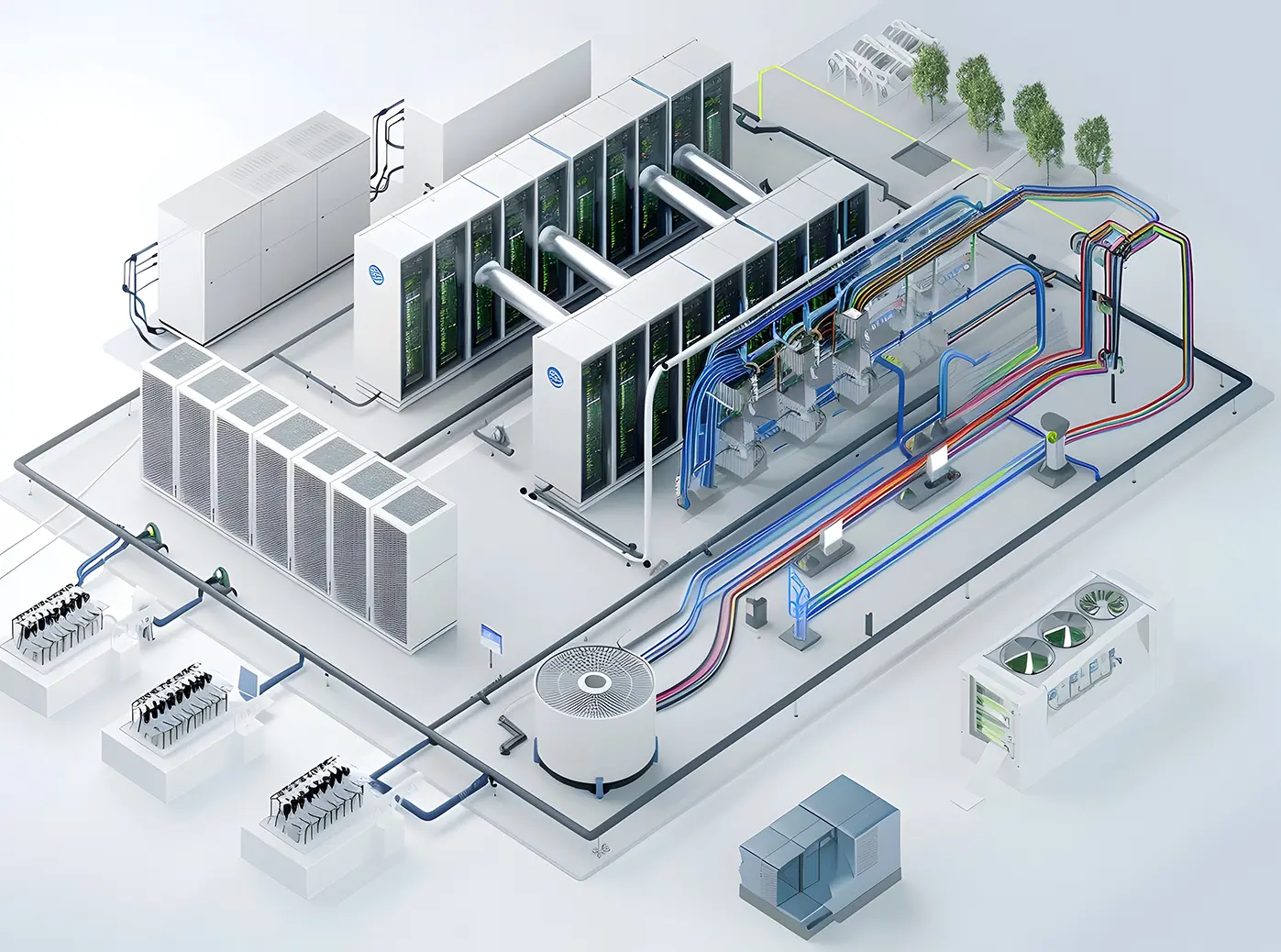
Data Centre Fire Safety.
How Twisted Conductor MICC Cables Enhance the Safety, Resilience and Sustainability of Data Centres

Data centres are integral to the UK’s economy, providing the core infrastructure that underpins digital activity across government, business and communities.

In recognition of their strategic importance, the government officially designated data centres as Critical National Infrastructure (CNI) in 2024 placing them on a par with essential services like water and energy. This reclassification brings with it a host of heightened operational, regulatory and security expectations. Data centre operators must be able to demonstrate robust fire safety, and operational resilience against physical and cyber threats, as well as a commitment to reducing facilities’ environmental impact.

Twisted Conductor Mineral Insulated Copper-Clad (MICC) cables offer a future-proof solution that directly supports these goals.

Fire Safety and Operational Continuity Under Extreme Conditions

The threat of fire is one of the most significant risks to data centres. Twisted Conductor MICC cables (also known as pyro twist cables) are specifically engineered to perform under the most extreme conditions, preserving the integrity of critical circuits even in intense fire scenarios.

Twisted MICC cables are constructed from just two completely inorganic and non-combustible materials - copper and magnesium oxide. Capable of withstanding temperatures up to 2,852°C, they offer exceptional resilience where conventional plastic insulated (“soft skin”) cables may fail.

By ensuring the uninterrupted operation of essential systems like fire alarms, emergency lighting, communication networks, and fire suppression mechanisms, Twisted Conductor MICC cables play a key role in disaster recovery planning. Their reliability helps data centres maintain operations during emergencies, reducing the risk of prolonged service disruptions.

Crucially, unlike plastic-insulated fire safety cables, MICC cables do not emit toxic smoke or gases when exposed to fire. This enhances the safety of evacuation efforts and can even be lifesaving in high-risk situations.

Superior Data Integrity Through Reduced Interference

Data centres are tasked with transmitting massive volumes of sensitive and time-critical information. Any distortion, loss, or corruption of data can compromise facilities’ service quality and business continuity.

Twisted Conductor MICC cables are designed to minimise electromagnetic interference (EMI), reducing ‘crosstalk’ (interference) between signal lines. The twisting of the cables’ copper conductors plays a vital role in shielding data transmission from electrical noise and maintaining signal clarity. This enhanced stability is particularly valuable in data centres which, by their nature, are high-density, high-speed data environments where performance is required around the clock.

Building Infrastructure Resilience for the Long-Term

With their CNI status, data centres are now expected to proactively manage risk and implement rigorous continuity plans. Twisted Conductor MICC cables directly support these requirements by offering a level of durability and resilience that far exceeds conventional plastic-insulated alternatives.

These cables are waterproof, rodent-proof, and highly resistant to mechanical damage, making them ideal for critical installations where long-term reliability is a priority. Their inorganic construction also means they are non-aging and do not degrade over time, reducing maintenance needs and the likelihood of unexpected failures.

A Responsible Step Toward Sustainability

As the UK accelerates towards its net zero ambitions and environmental scrutiny intensifies, the pressure on data centre operators to reduce carbon emissions and material waste is growing. MICC cables support sustainability targets by offering exceptional longevity and full recyclability. Made solely from the recyclable materials copper and magnesium oxide, they contain no plastic or hazardous materials which makes them safer during operation and more environmentally responsible at end-of-life. Furthermore, the reduced need for cable replacement over time contributes to lower resource consumption.

A Future-proof Solution for More Resilient Data Centres

Twisted Conductor MICC cables are a fire survival solution that also represent a strategic investment in the long-term performance, safety and sustainability of data centres. As the regulatory expectations for data centres become ever more stringent, these cables offer an affordable solution to future-proofing data centres’ vital operations.

  • You can explore more about Wrexham Mineral Cables Twisted Conductor MICC cables here.
How MICC Cables Reduce the Environmental Impact of Data Centres
Sustainable Critical Infrastructure: How MICC Cables Reduce the Environmental Impact of Data Centres

The data centre sector is expanding in the UK at an unprecedented rate, with the potential to contribute an additional £44 billion to the UK economy by 2035 (techUK).

But this rapid growth comes with increasing sustainability challenges. Data centres are power hungry facilities, and their environmental impact is under heightened scrutiny as the government looks to meet its net-zero targets. At the same time, the security and resilience of data centres is of paramount importance; the facilities are now designated as Critical National Infrastructure (CNI). It’s imperative for data centre operators to adopt greener technologies and materials while also protecting the resilience of these facilities.

One effective way to enhance data centre sustainability is by using Mineral Insulated Copper-Clad (MICC) cables (also known as pyro cables). These are true fire survival cables that offer significant environmental advantages over standard, plastic-insulated cables.

Why Fire-survival Cables are Essential for Data Centres

Reliable fire survival cables ensure the continuous operation of a data centre’s critical safety systems in the event of a fire. These include fire detection and alarm systems, emergency lighting, fire suppression mechanisms, backup power, and essential communication networks.

MICC fire survival cables act like the ‘lifeline’ of a building - they help prevent electrical failures in these critical systems and can ultimately help to save lives. MICC cables also significantly enhance operational resilience by minimising the risk of partial or complete shutdowns.

How MICC Cables Support More Sustainable Data Centres

MICC cables offer multiple environmental benefits in comparison to conventional “soft skin” polymer-based cables:

  • Durable and long-lived

MICC cables are built to last. Their copper sheath and mineral insulation make them significantly more durable than plastic-insulated cables, which degrade over time and require frequent replacement. This extended lifespan reduces material turnover, minimising waste and lowering the overall carbon footprint of data centres.

  • Made from 100% recyclable materials

Unlike soft-skin, plastic-insulated cables, which contribute to landfill waste, MICC cables are made entirely from the widely recyclable materials copper and magnesium oxide. This supports a circular economy, helping data centres reduce resource consumption and minimise their environmental impact.

  • Zero toxic smoke or gas emissions when exposed to heat

Soft skin cables contain organic materials that can release toxic fumes when exposed to extreme heat or fire. In contrast, MICC cables are completely inorganic, meaning they do not emit harmful smoke or gases. This enhances fire safety and helps maintain air quality in the event of a fire creating a safer working environment for data centre personnel.

  • Enhanced fire safety and reduced environmental impact

MICC cables are engineered for true fire survival, capable of withstanding temperatures exceeding 950°C for over three hours. Their ability to keep critical systems operational during a fire significantly reduces the risk of catastrophic failures. Most importantly, this helps to protect people’s lives during a fire event. It also reduces the environmental and financial costs associated with fire damage and reconstruction.

Meeting Sustainability Standards and Future-proofing Data Centres

Knight Frank’s latest Data Centres Global Forecast Report underlines the data centre industry must ‘balance the pursuit of innovation with the imperatives of sustainability and security’.

The ESG (Environmental, Social, and Governance) agenda is shaping the future of data centre expansion. Regulatory frameworks are enforcing stricter environmental and cybersecurity standards, making it essential for operators to integrate materials that provide both resilience and sustainability.

MICC cables not only meet but exceed stringent environmental and safety regulations, providing data centres with a future-proof infrastructure solution that supports long-term sustainability commitments.

MICC Cables: A Safer, More Sustainable Choice

As demand for data storage and processing power continues to grow, data centre operators need to prioritise sustainable infrastructure that also ensures their safety and resilience. MICC cables offer a durable, recyclable, and non-toxic alternative to conventional soft-skin cabling, helping to improve fire safety, and support a range of broader sustainability goals. · You can explore more about Wrexham Mineral Cables MICC cables.

Ensuring Data Centre Fire Safety
Ensuring Data Centre Fire Safety: The Critical Role of MICC Cables

Ensuring Data Centre Fire Safety: The Critical Role of MICC Cables

Data centres have quietly become part of the foundation of daily life, powering everything from business operations to essential cloud services.

According to the UK Department for Science, Innovation and Technology (DSIT), the data centre industry in the UK already generates an estimated £4.6 billion in revenues a year. In September 2024, the UK government designated data centres as Critical National Infrastructure (CNI), placing them on an equal footing with the country’s water and energy services.

Given their critical economic and social role, protecting data centres against fire hazards is a national priority and a key consideration for data centre managers and owners. One of the most effective ways to mitigate fire risks in these facilities is by using Mineral Insulated Copper-Clad (MICC) cables, which offer true fire survival performance alongside other important safety benefits.

Why Cable Fire Safety is a Priority Concern for Data Centres

Fire survival cables play a vital role in keeping a data centre’s essential systems operational in the event of a fire, including fire detection and alarm systems, emergency lighting, sprinkler and fire suppression systems, backup power, and communication networks.

By preventing electrical failures in these critical systems, MICC fire survival cables - often referred to as the ‘building’s heart’ - support a coordinated and effective response to fire incidents, reducing the risk of partial or total, data centre shutdown. Ultimately, this can help to protect both assets and lives.

What are the Fire-Survival Properties of MICC Cables?

Traditional ‘soft skin’ (plastic-insulated) cabling systems are fire-resistant rather than true fire survival cables, which can lead to system failures putting data centres’ critical systems at risk.

In contrast, MICC cables, also known as pyro cables, are specifically designed to withstand extreme temperatures and maintain circuit integrity during fires. Their construction, consisting of a copper sheath and a mineral insulation core, eliminates the need for organic materials that can burn or release toxic gases.

The key fire-survival properties, and additional benefits, of MICC cables include:

  1. High-temperature endurance: MICC cables are a non-ageing product that do not rely on plastics, polymers, resins, or tapes for fire protection. The copper sheath has a melting point of 1,085°C, while the magnesium oxide insulation withstands temperatures up to 2,852°C.
  2. Non-combustible materials: Unlike polymeric fire-resistant cables, MICC cables contain zero plastics components.
  3. Zero toxic smoke or gas emission: In the event of a fire, MICC cables do not release harmful toxic smoke or gases, helping to maintain air quality and visibility in evacuation scenarios. Toxic smoke and gases can often ignite aiding the spread of a fire.
  4. Waterproof and rodent-proof: The copper sheath makes MICC cables impervious to water and resistant to rodent damage.
  5. Long lifespan and durability: With a robust copper construction, MICC cables are resistant to corrosion, mechanical damage, and environmental factors, making them a long-term fire safety solution.
  6. Environmental credentials: MICC cables are made entirely from recyclable, non-toxic materials (copper and magnesium oxide), which makes it a more sustainable option than plastic insulated cables. As the data centre sector grows, addressing its environmental impact is an increasing concern.
  7. Reduced electromagnetic interference: The specification of a ‘twisted’ MICC cable offers further advantages for data centres. These cables’ conductor wires are twisted together, reducing electromagnetic interference (EMI) and minimising crosstalk. This ensures cleaner signal transmission, enhancing data integrity and reliability.

Meeting Stringent Fire Safety Regulations

With the UK government designating data centres as Critical National Infrastructure, compliance with fire safety regulations is, of course, non-negotiable. Regulatory bodies,

including the British Standards Institution (BSI) and the National Fire Protection Association (NFPA), all call for the use of fire-resistant cabling in high-risk environments.

MICC cables not only meet but exceed these regulatory requirements, as detailed in our white paper, ‘Expecting the Unexpected: specifying safety-critical circuit cables for fire survival’. By investing in MICC cables, data centres can ensure compliance with safety standards while significantly reducing fire-related risks through a durable, long-term solution.

Future-Proofing Data Centres with MICC Fire Survival Cables

As data centres continue to consolidate their status as essential national digital infrastructure, investing in MICC cables is a strategic move that enhances fire safety, ensures operational continuity, and safeguards valuable data assets. By integrating MICC cables into data centres’ infrastructure, data centre managers and owners can not only comply with evolving safety regulations but also adapt a more sustainable solution, helping to reduce these facilities’ impact on the environment. · You can explore more about Wrexham Mineral Cables MICC cables here.